
Joshua Chambers: Rainy Days and Mondays
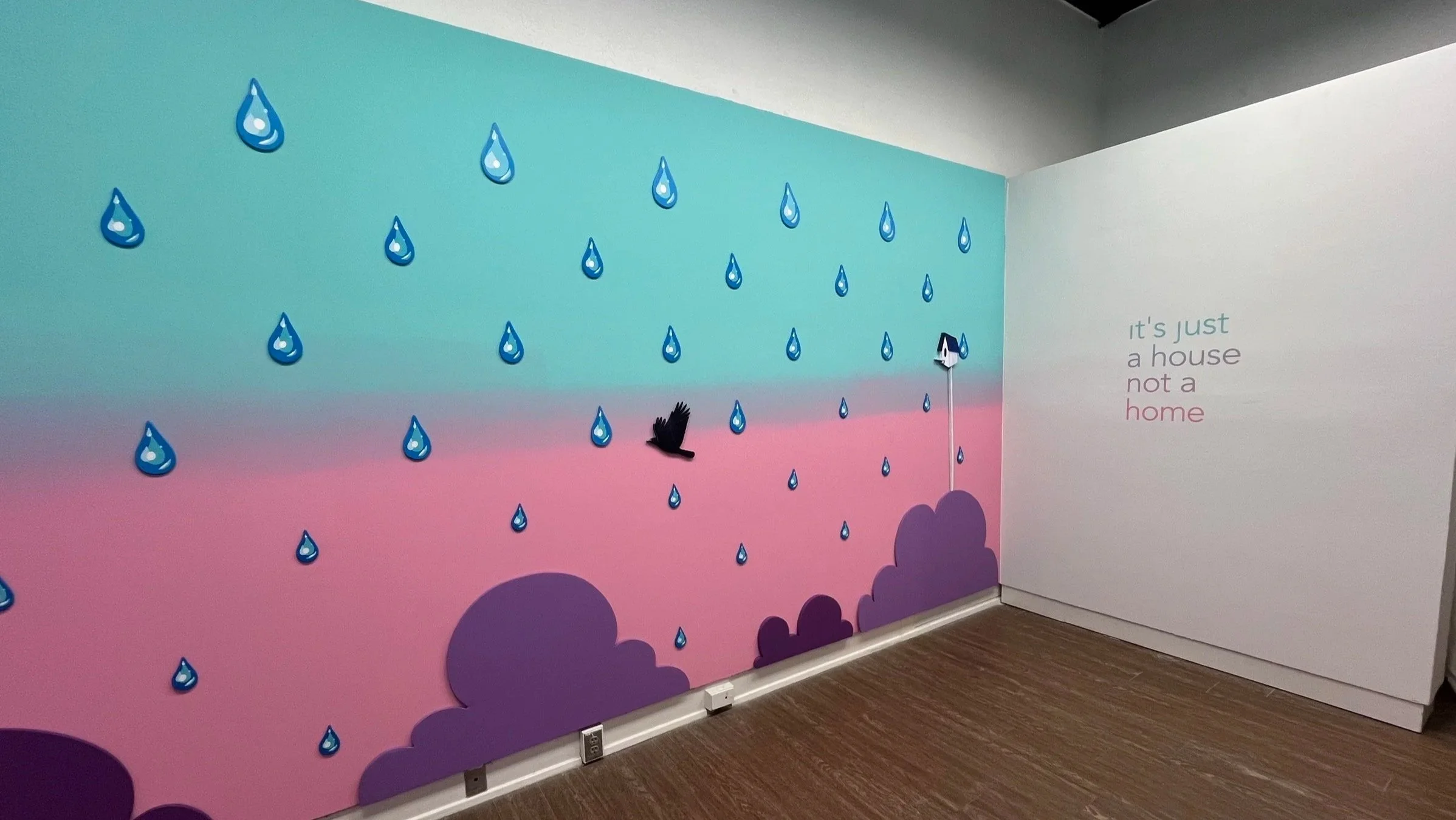
A studio art professor at Centenary College of Louisiana, Joshua Chambers’s exhibition Rainy Days and Mondays reinterprets his typical canvas works as an immersive installation. He combines memory, metaphor, and the absurd to create work that exists between logic and imagination.
Many of your works feature animals, masks, and theatrical elements. What do these recurring motifs symbolize in your visual storytelling?
Many of the elements in my artwork carry multiple meanings. On one level, the imagery has autobiographical origins—many of the animals represent me, family members, or friends. The theatrical elements and props help establish the settings in which these characters interact. On another level, symbolism emerges through the viewer’s engagement with the work. Rather than directing attention solely to my personal narrative, I invite viewers to play an active role in constructing their own interpretations. Their associations with the animals, masks, and actions within the scene create a second layer of meaning that expands the work beyond my original intent. My hope is that this dialogue between my motivations and the viewer’s imagination creates a shared, yet open-ended, narrative space.
You describe your compositions as “symbolic landscapes” built from personal mythology. How do memory and metaphor shape the worlds you create on canvas?
Each work begins with a memory that I immediately recast and relocate into a constructed setting. Through this process, memory becomes a metaphor—the personal shifts into the symbolic as the remembered experience takes on new form within the imagined landscape.
With a background in set design, your paintings seem to unfold like scenes from an ongoing play. How has theatrical design influenced the way you construct space and narrative in your work?
One of the most valuable lessons I learned from set design was the importance of editing. It’s impossible to build an entire world on stage, so every element must be chosen with intention. When I first saw plays where the environment was distilled to just a few essential pieces—a free-standing door, a bed, and the occasional prop—I realized how powerful restraint can be in directing attention and engaging the viewer’s imagination.
You mention that text appears subtly throughout your paintings, like “lines from a half-remembered play.” How do language and visual imagery interact in your creative process?
Sometimes the language helps construct the scene, and sometimes the scene determines the language, but both enter the composition from different starting points. The text often comes from snippets of conversation, readings, or song lyrics—fragments that may stay intact or become intentionally “misremembered” as they evolve within the work. The imagery, meanwhile, grows from my reimagined memories, rendered with varying degrees of accuracy or distortion. Together, these elements create a dialogue between what is remembered, imagined, and invented.
The title Rainy Days and Mondays evokes both nostalgia and emotional weight. How does mood and weather, metaphorical or literal, play into your storytelling?
The mood or weather in my paintings serves to prime the viewer’s emotions, creating an atmosphere that shapes how they engage with the scene. The feelings they associate with that atmosphere become another layer in how they decode—or even encode—the narrative.
Rainy Days and Mondays is on display at the Meadows Museum from November 4 – December 5, 2025.